
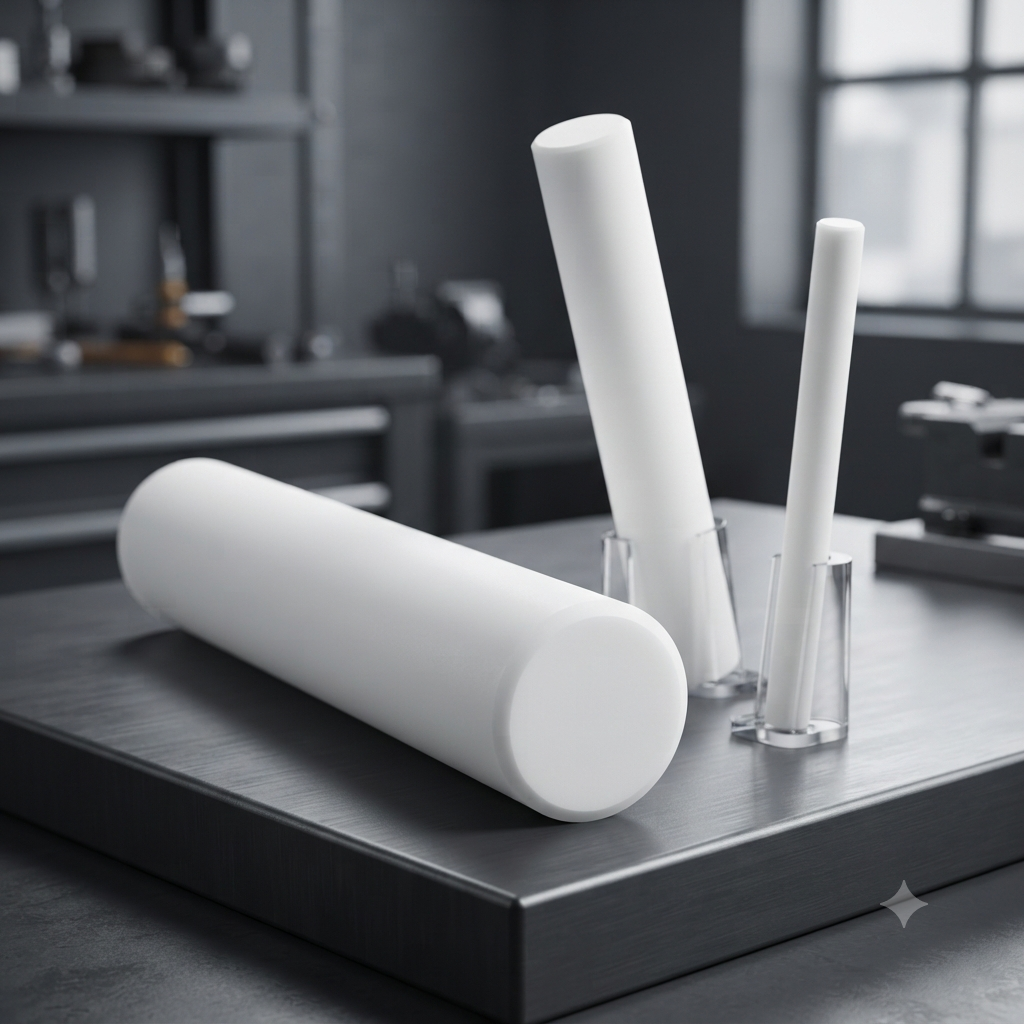
PTFE Rod
PTFE Rod is a high-performance engineering plastic material known for its excellent chemical resistance, non-stick properties and extremely low coefficient of friction. It offers outstanding resistance to moisture, corrosion and various aggressive chemicals, making it suitable for demanding industrial environments. Its excellent electrical insulation properties and ability to withstand a wide temperature range make it a reliable material for specialized engineering applications.
PTFE Rods can be easily cut, drilled, turned and machined into customized shapes and dimensions according to industrial requirements. They are widely used for manufacturing seals, bushes, gaskets, valve seats, insulators, bearings, spacers and chemical processing components. Their non-reactive nature and low-friction surface make them suitable for applications where chemical stability and dependable performance are essential.
Properties and Benefits of
PTFE Rod
PTFE Rod offers an excellent combination of chemical inertness, thermal stability, electrical insulation and non-stick characteristics. Its extremely low friction surface helps minimize wear in moving components, while its resistance to moisture and corrosive substances makes it suitable for challenging industrial conditions. These properties make PTFE Rod a preferred material for applications involving chemical exposure, high temperatures and continuous mechanical operations.
Another important advantage of PTFE Rod is its versatility in machining, allowing it to be converted into precision components for different industrial applications. It can be manufactured into customized seals, gaskets, bushes, valve components, spacers and electrical insulation parts. Its outstanding resistance to chemicals and reliable performance make it a valuable engineering material across multiple industries.
Frequently Asked Questions About PTFE Rod
Learn more about PTFE Rod, its properties, applications and industrial uses.
PTFE Rod is commonly used for manufacturing industrial components such as seals, gaskets, bushes, valve seats, spacers, bearings and electrical insulators. Its chemical resistance, non-stick properties and low friction make it suitable for demanding engineering and chemical processing applications.
PTFE Rod offers excellent chemical resistance, outstanding electrical insulation, low friction, non-stick characteristics and high thermal stability. It also provides excellent resistance to moisture and corrosion, making it suitable for various industrial environments.
Yes, PTFE Rod can be cut, drilled, turned and machined into different shapes and dimensions. It can be customized to manufacture seals, bushes, gaskets, valve components, spacers and other precision engineering parts according to specific requirements.
PTFE Rod is widely used in chemical processing, pharmaceutical, electrical, automotive, food processing, oil and gas and general engineering industries. Its chemical resistance and insulation properties make it useful for specialized industrial equipment and machinery components.
While selecting a PTFE Rod, consider its required diameter, length, operating temperature, chemical exposure, mechanical load and intended application. The required material grade and dimensional specifications should also be evaluated to ensure suitable performance in the operating environment.